Simple updates · Two-tone transitional
Two-tone &
brass.
The same cabinets, in two colors. Lowers in deep green, uppers in warm white, brass hardware that will age, and new quartz counters over the boxes you already own. The most change for the least construction.
The painted English kitchen, applied to an ordinary American shaker kitchen
Call about a kitchen like this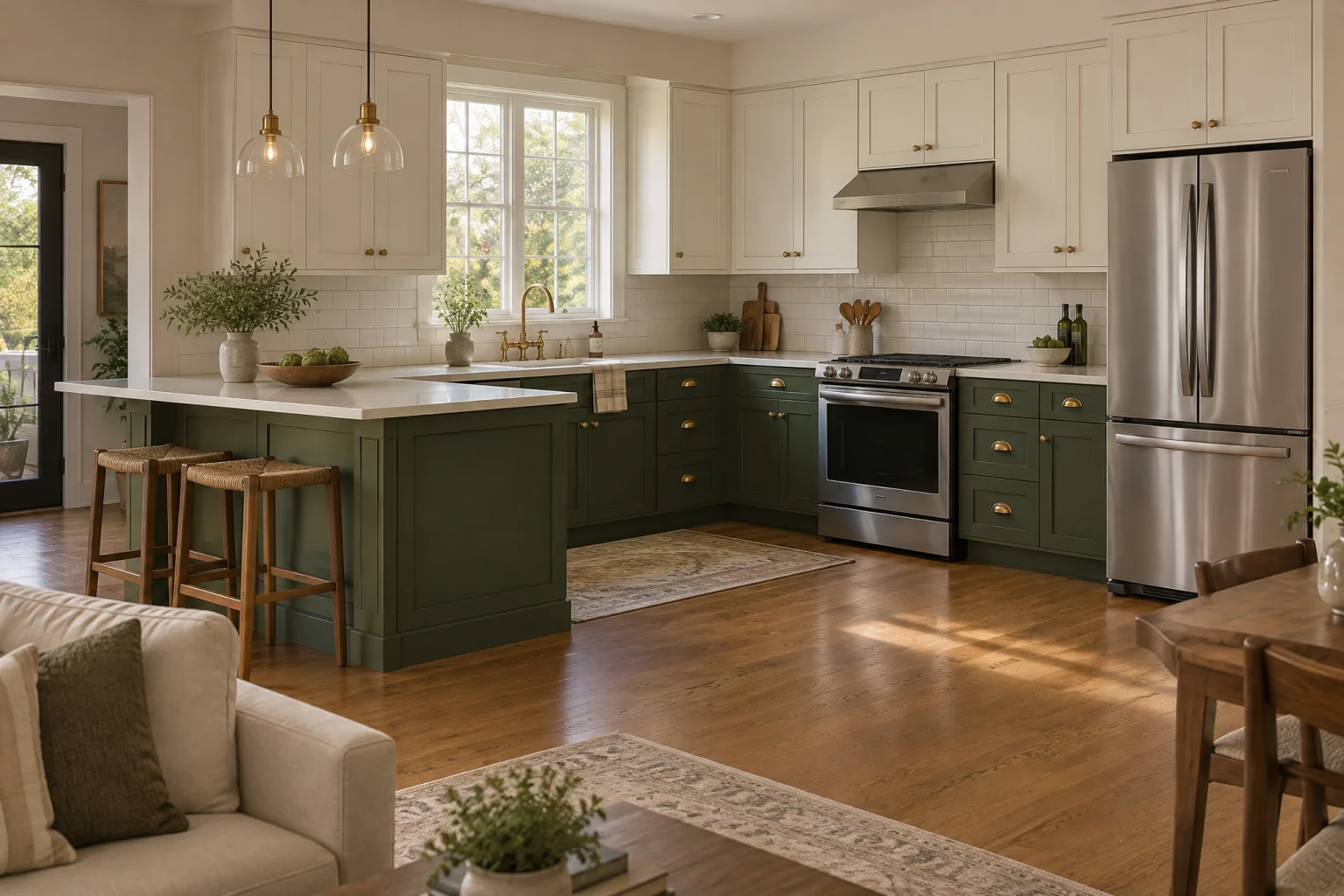
The look
Where it comes from,
and why it works.
Two-tone is what happens when you notice that lower cabinets and upper cabinets do different jobs. The lowers are furniture: heavy, grounded, and the thing you lean on. The uppers are wall. Painting them differently makes the room read taller and calmer at once, and it is the trick that painted English kitchens have used for a century.
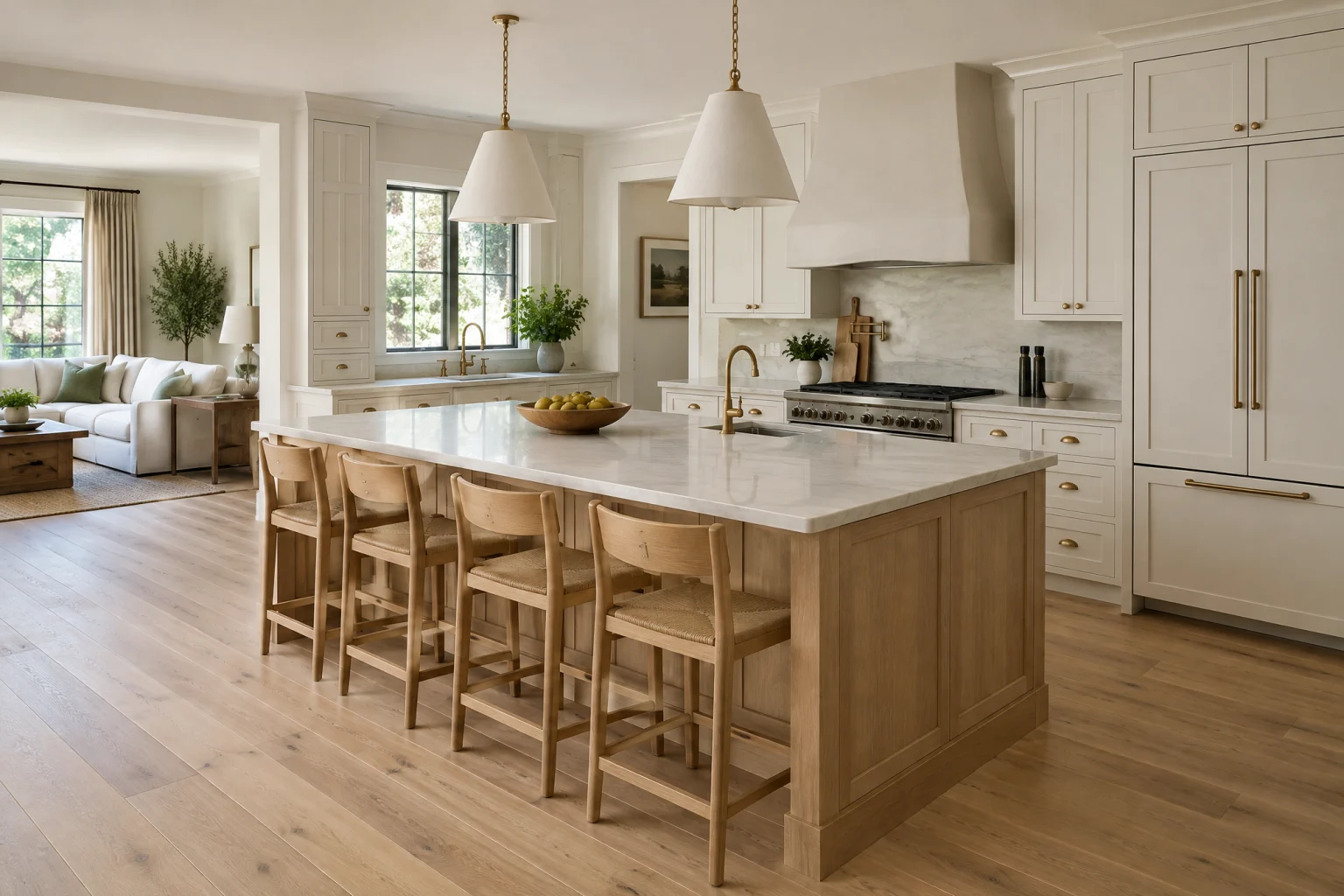
On a plain American shaker kitchen the effect is dramatic. The lowers and the peninsula go deep green, or navy, or charcoal; the uppers go warm white to match the walls. The old brushed-nickel knobs come off and unlacquered brass cup pulls and knobs go on. The counters are replaced with white quartz and the backsplash with subway tile, and the room is transformed while the sink, range, and refrigerator have not moved an inch.
It works because the cabinets were fine; they were just beige. The color puts weight where the eye wants it, low, and the brass gives the paint something to glow against. It is the first project many households do and, quite often, the last one they need.
Palette
The colors
doing the work.
A handful of tones carry the room. Everything else is texture.
- Deep green#2f4a3f
- Warm white#f3efe6
- Unlacquered brass#a8874f
- White quartz#ebe8e1
- Medium oak floor#b98d5c
Materials
What it’s
made of.
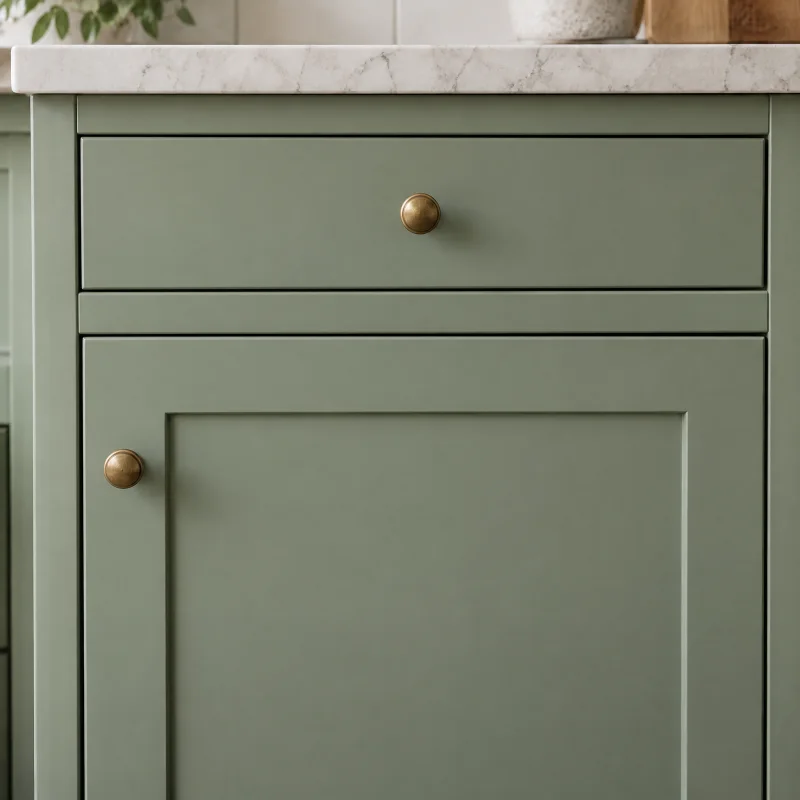
Cabinetry
Painted shaker cabinets
The most adaptable cabinet there is. In white it disappears; in green, navy, or charcoal it becomes the room. A slim frame reads modern, a wide one reads traditional.
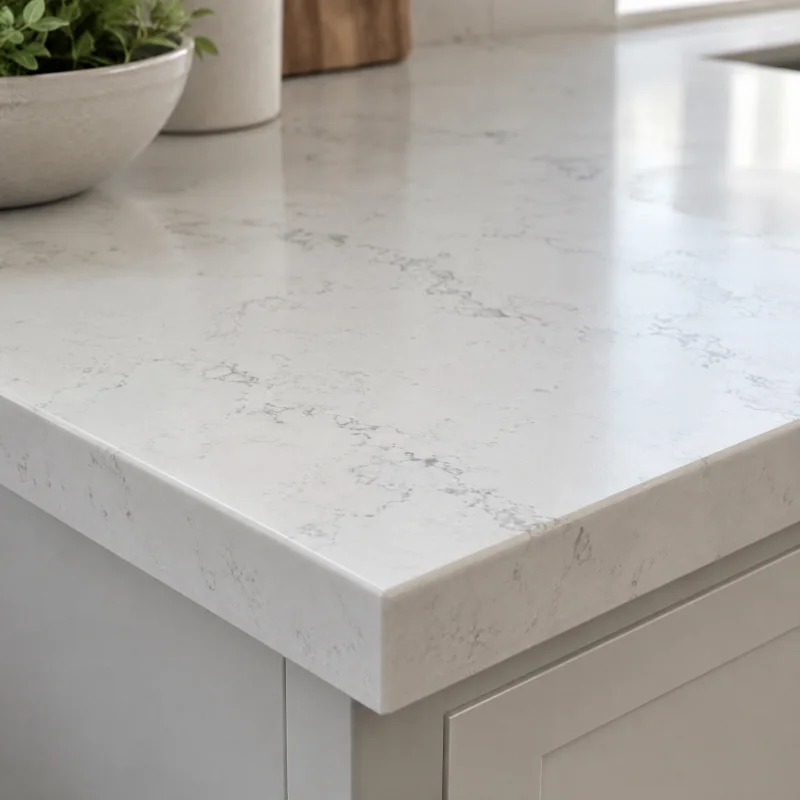
Countertops
Engineered quartz
Consistent and controlled. The veining repeats from slab to slab, which is the giveaway and also the reassurance: what you see in the showroom is what arrives.
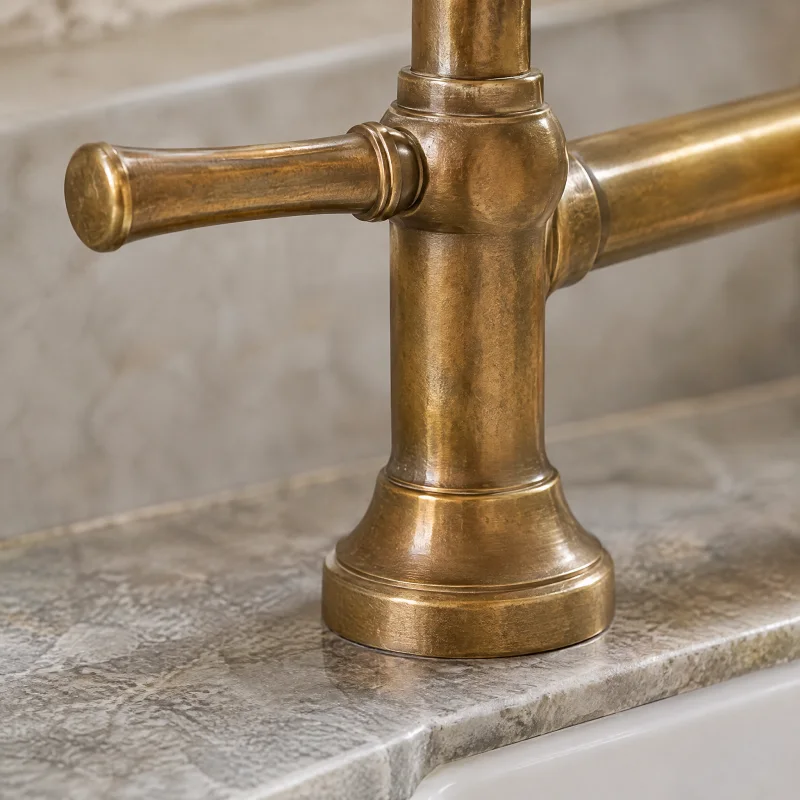
Metal finishes
Unlacquered brass
A living finish that records the household. Bright at first, then a deep old-gold patina, brighter where hands land.
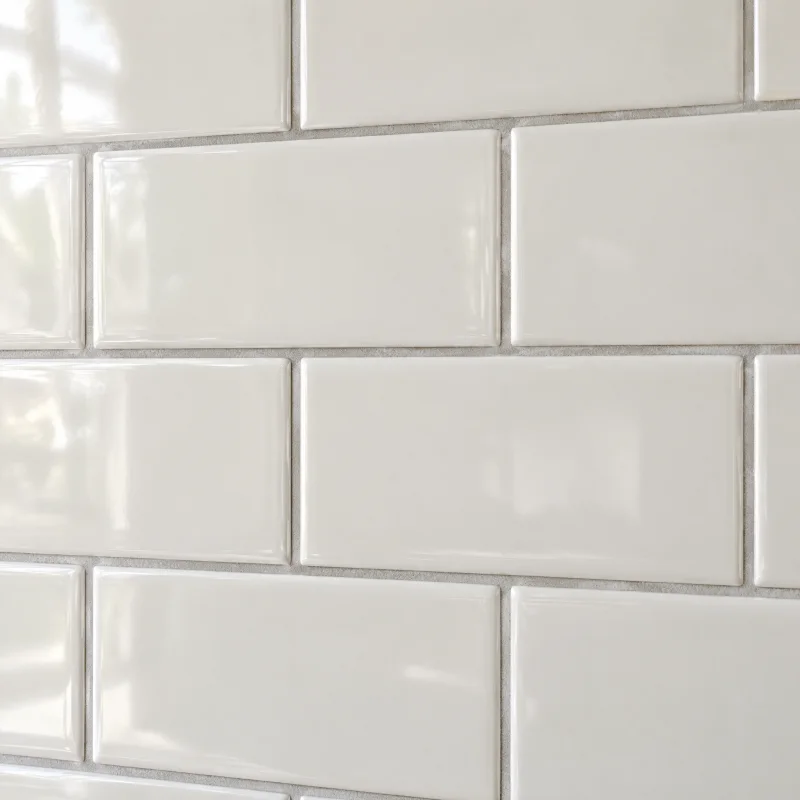
Backsplash
Subway tile
Clean and timeless. Grout is the design decision: white grout disappears, grey or charcoal grout draws the grid, and a handmade-look glaze softens it.
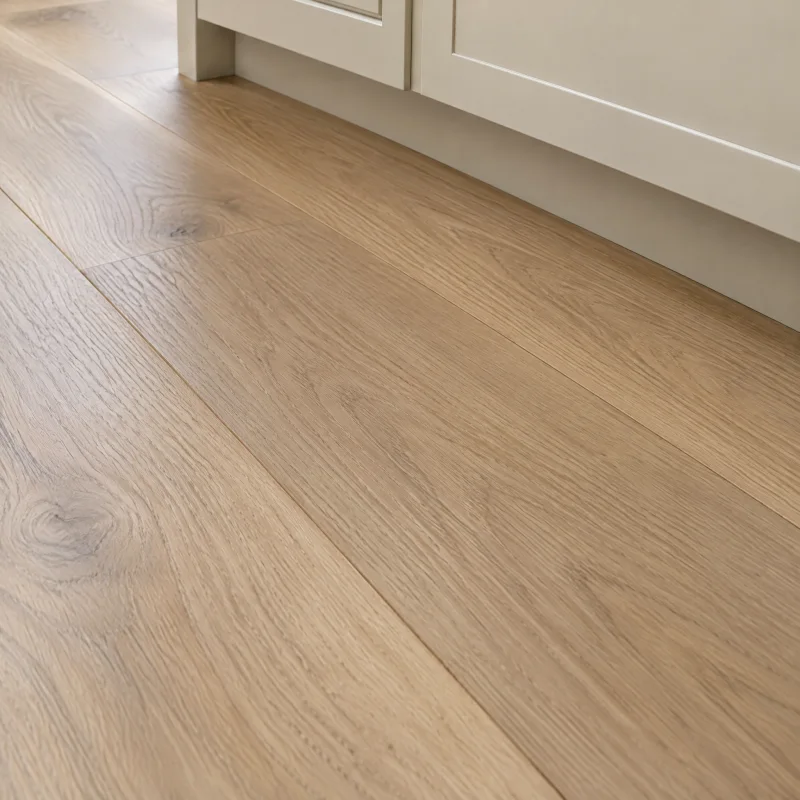
Flooring
Hardwood floor
The floor that makes an open plan one room. A matte natural finish reads current; a warm stain reads traditional.
Fixtures & appliances
The pieces
you’ll use every day.
- Repainted shaker doors
- Doors and drawer fronts taken off, sprayed in a hard enamel in a shop, and rehung; the boxes are painted in place. This is the whole difference between a paint job that lasts and one that chips.
- Unlacquered brass cup pulls and knobs
- Cup pulls on drawers, small knobs on doors, all in raw brass that darkens with use; the old holes are filled if the spacing changes.
- Brass bridge faucet
- Replaces the old single-lever at the same sink; the one new plumbing fixture in the room, and the one you see from the door.
- White quartz counters
- Templated on the existing boxes with a new undermount stainless sink, the eased edge kept simple so the color does the talking.
- Slide-in range in the same spot
- The existing range, or a new one of the same width, which keeps the gas and electrical exactly where they are.
- Subway tile backsplash
- Counter to uppers in a running bond, with a grout a shade darker than the tile so the grid reads as texture.
Layout
The move
it depends on.
The move is to keep the layout exactly. Sink, range, and refrigerator stay on the same walls and the same connections, the peninsula stays where it is, and the only plan change is deciding which cabinets carry the dark color. The rule of thumb is every cabinet below the counter, including the peninsula on all of its faces, goes dark, and every cabinet above goes light; a tall pantry cabinet goes light so the wall of color stops at counter height. If the kitchen has a window wall with no uppers, the dark lowers under it make that wall the best one in the room.
Light
Daylight
and evening.
Nothing about the windows changes, so the color is chosen in the room’s real light: a deep green in a north-facing kitchen goes grey, and the same green with afternoon sun goes bright. Under-cabinet strips are added if there were none, because dark lowers absorb light and the counter needs its own. Warm bulbs throughout; brass under cool light looks like chrome.
Is it for you
Best for.
A kitchen with a sensible layout and solid boxes, in a house where the owner wants color but not construction. The natural first project for a transitional or builder-grade shaker kitchen under ten years old.
What it takes
A simple update. Plumbing, gas, and electrical stay put, the cabinet boxes stay put, and there is no structural work. The doors leave for a spray shop and come back, so the kitchen is usable, if door-less, for most of the project; the counter swap is the one stretch without a sink. The counters are the largest line item and the longest lead time here, since the cabinets are not being ordered, and they are templated once the paint is done. Choose the faucet and any new range before the counters are templated so the holes and the gap are right.
Talk through your version of it- 01
Have the doors sprayed off-site in a catalyzed enamel; brushed paint on kitchen doors chips within a year.
- 02
Paint a large sample board and stand it against the lowers for two days, morning and evening, before committing.
- 03
Take the dark color around every face of the peninsula and onto the toe kick; a light toe kick under dark doors looks unfinished.
- 04
Match the new hardware to the old hole spacing where you can, or fill and re-drill every door before painting.
- 05
Keep the walls and the uppers the same warm white so the color break happens once, at counter height.
Questions about this look
Good questions.
Honest answers.
Will painted cabinets hold up?
Sprayed in a shop in a proper enamel and cured, yes; the finish is as tough as a factory finish. Painted doors can show a hairline at the panel joints as the wood moves with the seasons, which is normal on any painted wood door and touches up easily.
Which color goes on the bottom?
The darker one, almost always. Weight low and light high makes a room feel taller. The exception is a kitchen with no upper cabinets at all, where a single color on the lowers and open shelves above does the same job.
Is this the same as refacing?
No. Refacing replaces the doors and drawer fronts; this keeps and repaints them. If the doors are a style you like and are sound, painting is the smaller job. If they are dated or damaged, refacing gives new doors in the same two-tone scheme.
If you like this
Related
kitchens.
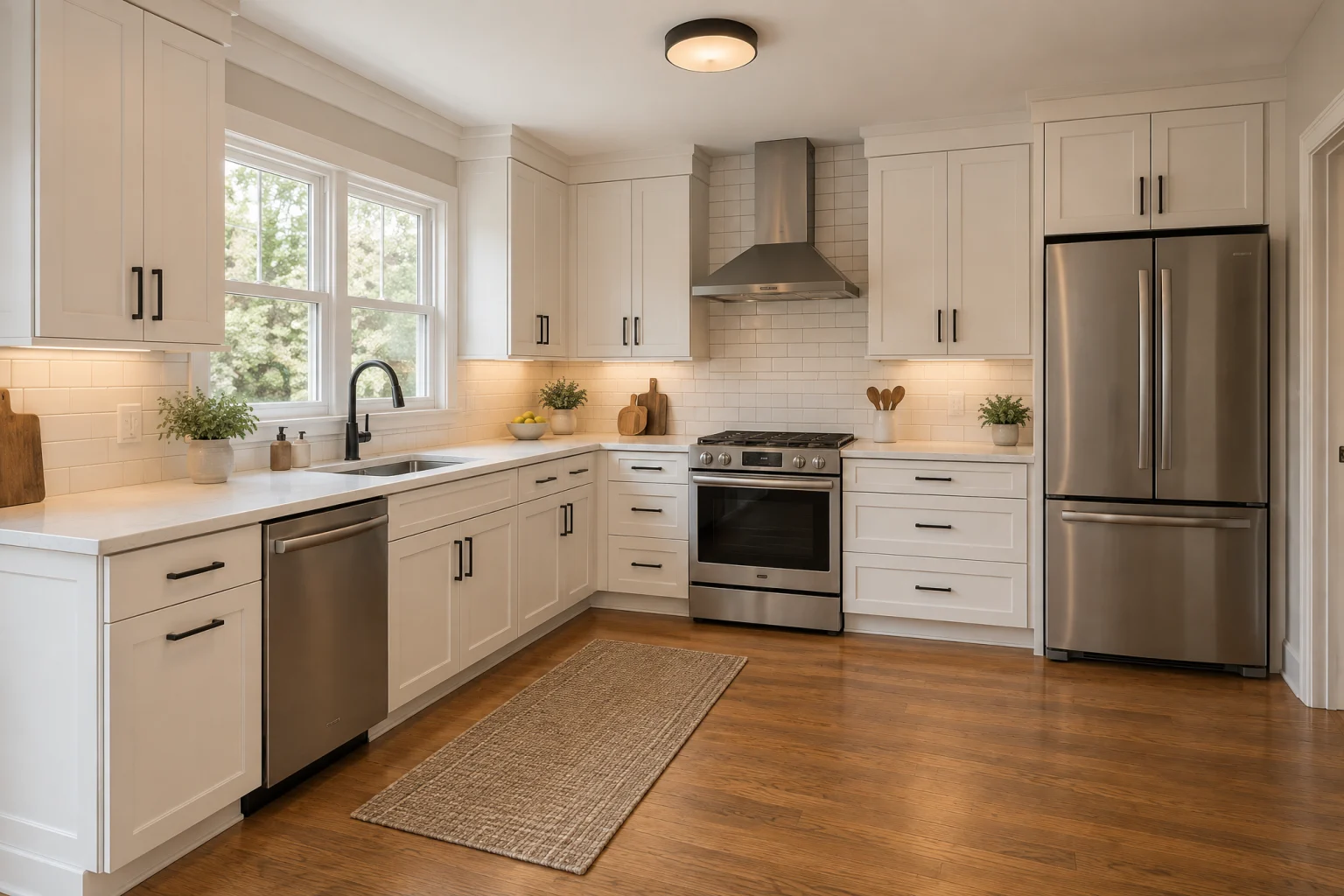
Simple updates
The refaced kitchen
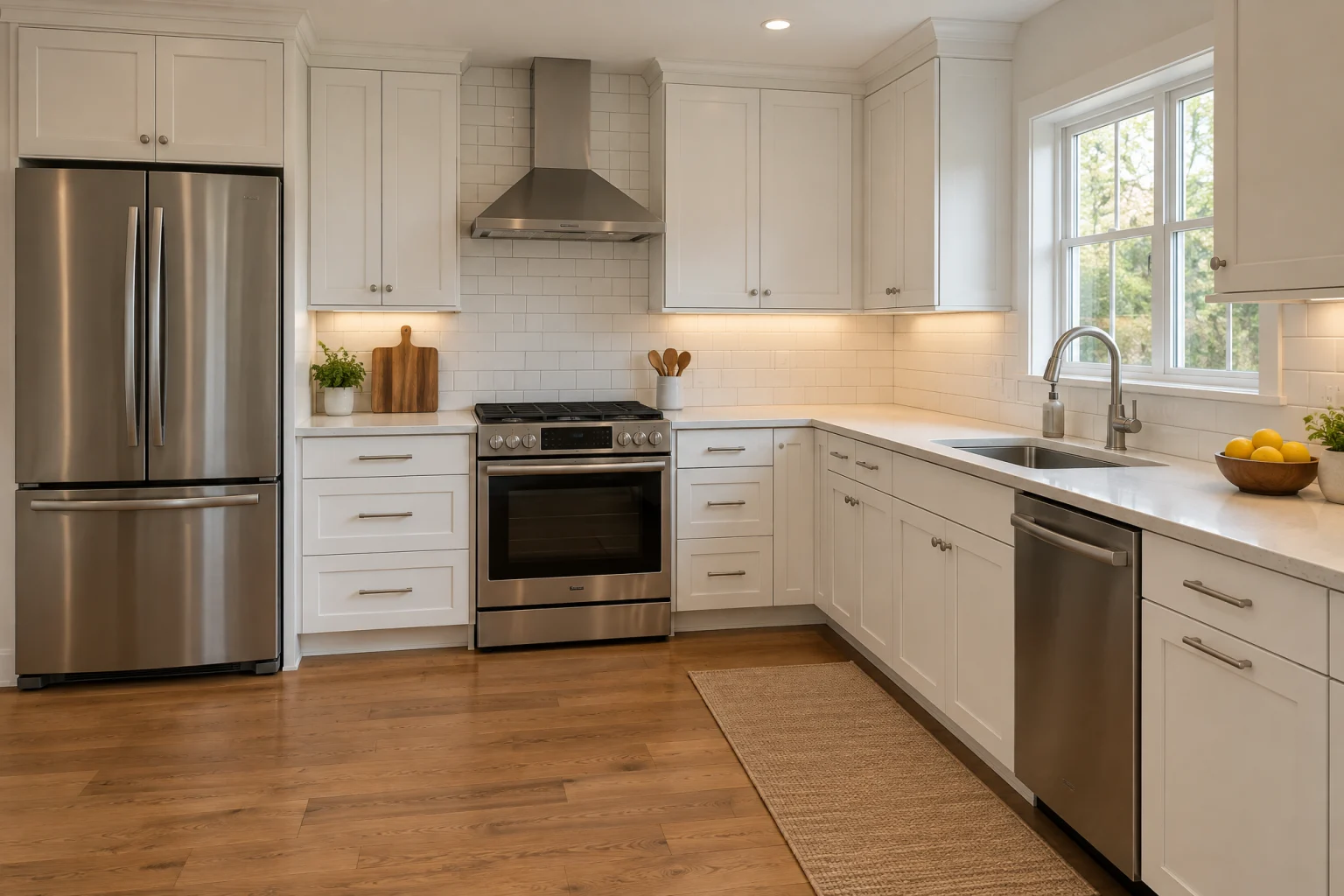
Simple updates
Fresh & timeless
Complete remodels
The gathering kitchen
AI-created design inspiration, not completed Valmere projects. Materials and layouts are starting points to discuss for your home.
Your next chapter starts here
Let’s talk about a two-tone transitional kitchen.
Bring this page.
A consultation starts with what you’re drawn to. This style, your room, your priorities; we’ll take it from there.
Call for a kitchen consultation